
TECHNOLOGY
COMPACT VERTICAL-AXIS WIND.
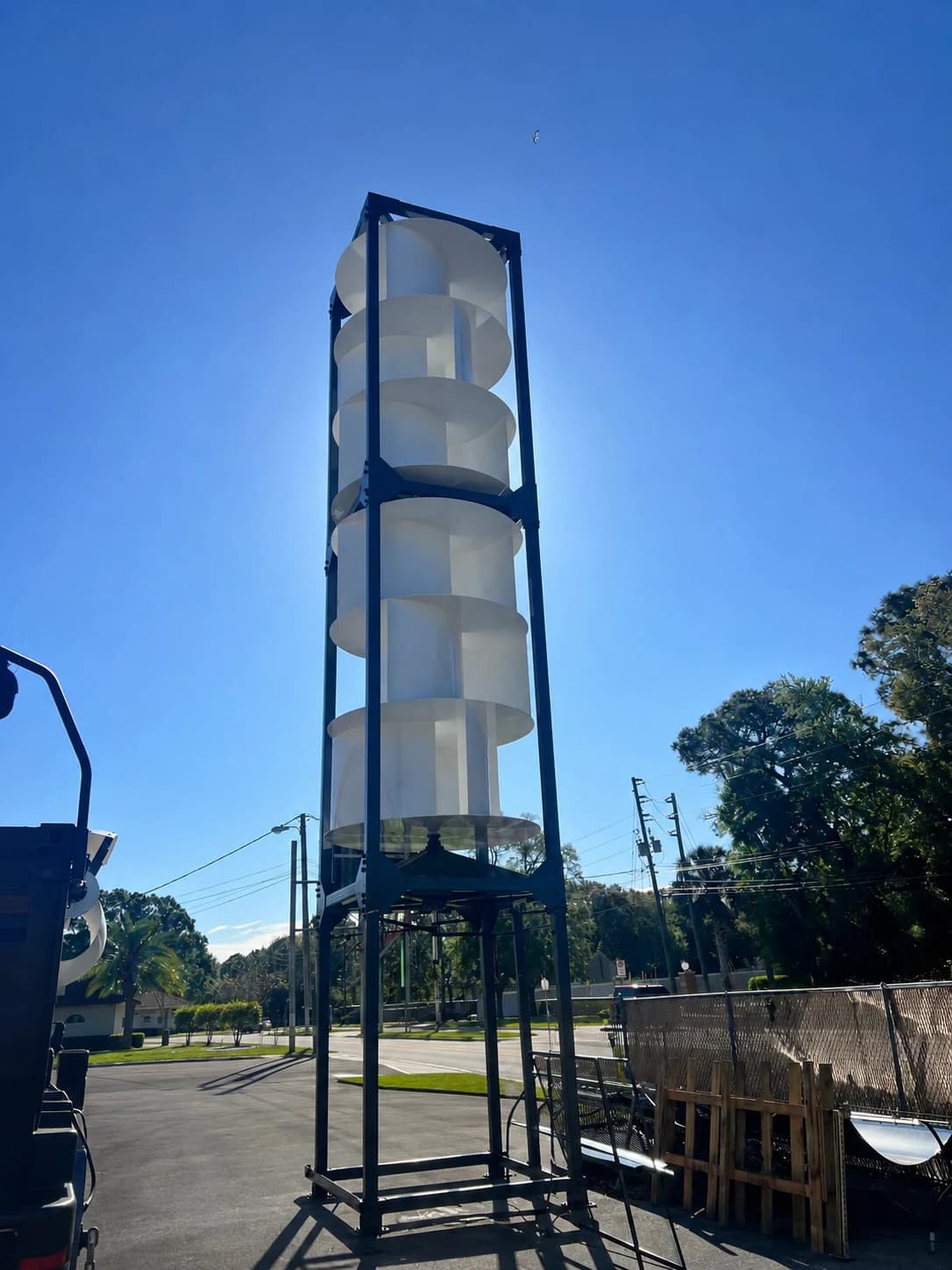
A turbine about 30 feet tall and 10 feet wide, designed to generate next to the load.
IN THE FIELD
OPERATING FOOTAGE.
The WindIQ turbine in Chapala, Mexico.
WHY COMPACT VAWT
Utility-scale wind is a logistics project as much as an energy project: large land area, wide turbine spacing, ports that can handle blades, roads that can take the loads, and cranes that can set a machine that size.
WindIQ’s vertical-axis unit is built for the opposite condition — sites where those requirements are impractical or too expensive. The approximate size is 30 feet tall by 10 feet wide. It is a distributed generator, not a wind farm.
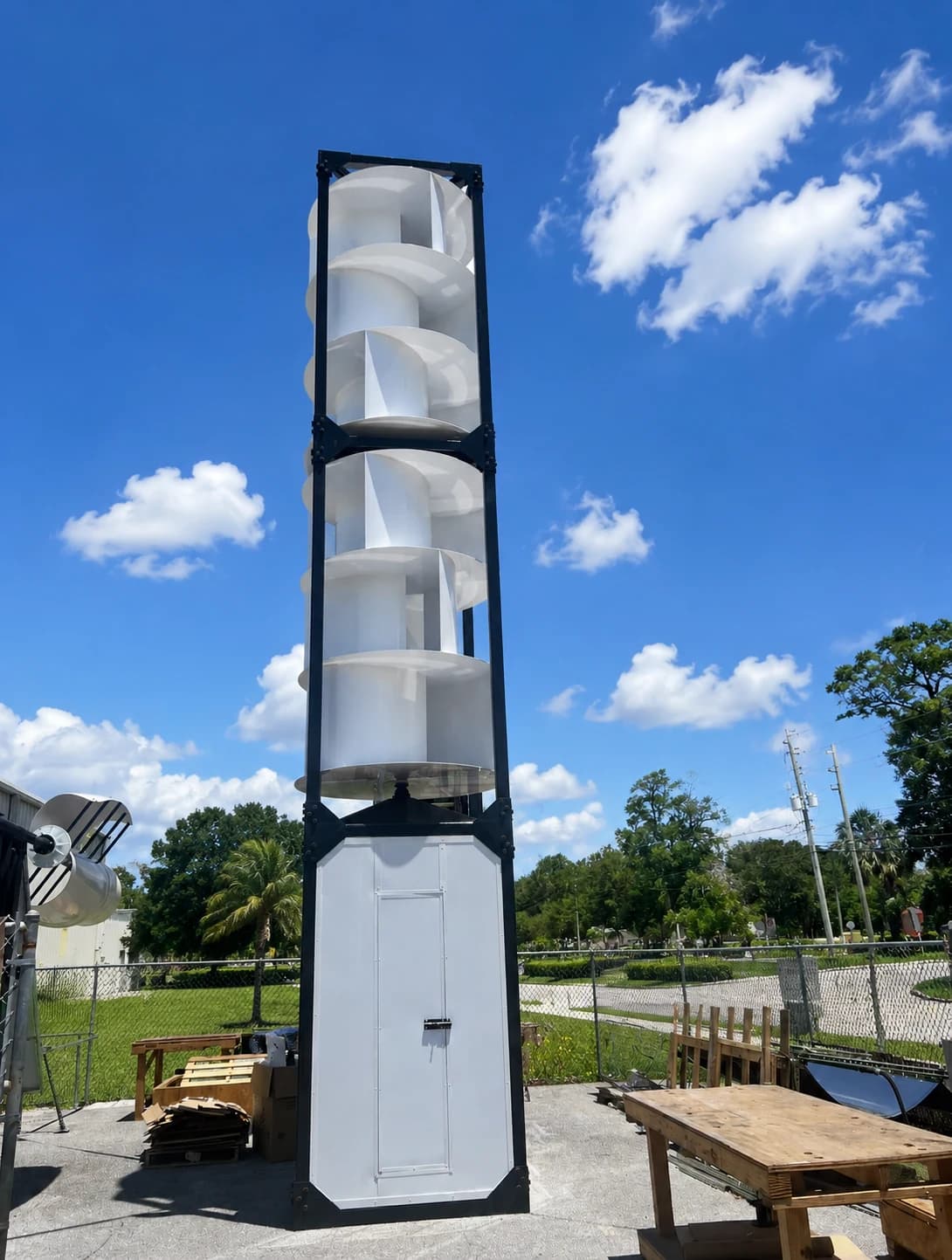
LAYERED GENERATION
WindIQ is not a solar replacement and not a competitor to utility-scale renewables. It is another layer: wind into power electronics, then to the facility, storage, and the grid.
Hybrid sites can combine compact wind with solar, hydro, storage, diesel backup, and remaining utility service. Wind is useful when the sun is down or weak — the hours solar alone does not cover. Diesel can remain as backup without being the only answer.
THE DELIVERY PROBLEM
In many markets the issue is not only whether generation exists. It is whether power can reach the load. Long T&D paths lose energy and fail in storms.
Industry figures often put typical transmission and distribution losses around 5–6% on developed grids, and 10–20% or more on weaker systems. In the Philippines, published ranges have often sat around 8–13%, depending on region, utility, and period. Those are context for why local generation matters. They are not WindIQ performance claims.
Compact wind belongs where large farms do not fit, solar alone is not enough resilience, diesel is too costly to run as the main source, and the grid is incomplete.
APPLICATIONS
Islands, coastal communities, telecom, resorts, industry, and weak-grid sites. Project review still has to confirm wind, siting, and electrical fit.
Localized generation where long undersea or coastal transmission is expensive, fragile, or missing — including typhoon-exposed sites.
DiscussPower closer to the load where the grid is incomplete, unreliable, or costly to extend.
DiscussCompact generation for telecom sites that cannot take a utility-scale footprint or a major grid upgrade.
DiscussOn-site wind layered with solar and storage, so diesel is backup rather than the default.
DiscussGeneration at plants and yards that need more power at the load without a large land take.
DiscussA compact turbine next to offices, campuses, and mixed-use sites.
DiscussDistributed generation for facilities that cannot depend on a wind-farm footprint.
DiscussA distributed layer beside existing grid service — not a replacement for utility-scale arrays.
DiscussTHE TURBINE
Operating and site footage of the WindIQ machine.
TECHNICAL INFORMATION
For the configuration that applies to a site, contact WindIQ Asia. Output, cost, and installation depend on the project.
REQUEST TECHNICAL INFORMATION